You just watched the credits roll on Jennifer Kent’s 2014 psychological horror masterpiece, and that final scene left you staring blankly at your screen. Instead of burning the house down or banishing the monster to another dimension, Amelia locks the creature in her basement, feeds it a bowl of earthworms, and walks away with a serene, knowing smile. By the time you finish reading this breakdown, you will know exactly what that smile means, why the creature couldn’t be killed, and how this film perfectly captures the terrifying reality of human trauma.
Table of Contents
At a Glance: The Babadook
- Director / Writer: Jennifer Kent
- Lead Cast: Essie Davis (Amelia Vanek), Noah Wiseman (Samuel Vanek)
- Release Date: 2014
- Where to Watch: AMC+, Shudder, Rent/Buy on VOD Platforms
- Core Themes: Grief, Motherhood, Postpartum Depression, Mental Illness
[SPOILER WARNING: This article contains massive, unfiltered plot spoilers for the entire movie. If you haven’t seen The Babadook, bookmark this page, go watch it, and come back.]
The Short Answer: What That Smile Actually Means
Let’s cut right to the chase. Amelia smiles at the end of The Babadook because she has finally accepted her grief instead of trying to outrun it.
For seven years, she lived in a state of suffocating denial. She refused to talk about her husband Oskar, who died in a brutal car crash while driving her to the hospital to give birth to their son, Samuel. She locked all of Oskar’s belongings in the basement and refused to let anyone mention his name.
When she descends into the basement in the final scene, the monster shrieks at her, trying to intimidate her. But Amelia doesn’t flinch. She stands her ground, calms the beast, and provides it with food. When she turns around and smiles, it is a moment of profound, hard-won victory. She realizes that the darkest, ugliest part of her psyche no longer controls her. She survived the descent into her own personal hell, and for the first time since her husband died, she is genuinely at peace.
The Babadook is Not a Monster (Well, Not a Literal One)
To fully grasp the ending, we have to look at what the creature actually is. The Babadook is not a movie about a supernatural demon haunting a suburban home. It is a movie about the horrifying, destructive power of unresolved trauma.
The monster is the physical embodiment of Amelia’s suppressed grief, depression, and the dark, unspoken resentment she holds toward her son. Every time Samuel acts up, every time she gets a meager few hours of sleep, her resentment grows. And as the storybook famously warns: “The more you deny, the stronger I get.”
Think about how the monster is presented to us. It wears a dark coat and a top hat-clothing remarkably similar to the items Amelia locked away in her husband’s basement wardrobe. Later in the film, the monster literally takes on Oskar’s face, trying to coax Amelia into giving Samuel over to him. The film practically screams its central metaphor at us: Amelia’s refusal to process her husband’s death has mutated into an entity that wants to destroy her remaining family.
Anatomy of a Breakdown: Amelia’s Repressed Trauma
Amelia is completely isolated. Her sister refuses to be around her because Samuel is “too difficult.” Her coworkers pity her. The school system rejects her child.
We watch Amelia desperately try to hold onto a facade of normalcy. She pastes on a fake smile, speaks in a soft, exhausted voice, and tries to be the “good mother.” But beneath that fragile surface is a woman drowning in unacknowledged rage. The genius of Jennifer Kent’s script is how it treats motherhood. It rips away the idealized, glowing image of raising a child and exposes the exhausting, mind-numbing frustration that can accompany it-especially for a single mother dealing with severe trauma.
When Amelia finds the pop-up book on Samuel’s shelf, it acts as a catalyst. The book brings all her buried emotions to the surface. Notice how the Babadook’s activities mirror symptoms of severe depression and psychosis:
- Sleeplessness and chronic fatigue
- Social isolation
- Loss of appetite (finding glass in her soup)
- Violent, intrusive thoughts (the horrifying visions of harming her dog and son)
She tries to rip the book apart. She tries to burn it. But you cannot simply throw your psychological damage in a trash can and expect it to disappear. It always comes back, pieced together with black tape, demanding to be acknowledged.
The Turning Point: “You Are Trespassing in My House!”
The climax of the film is a masterclass in psychological confrontation. After the Babadook fully possesses Amelia, forcing her to kill their dog and hunt her own son, Samuel manages to subdue her. He traps her in the basement and forces her to vomit up the black, inky sludge of the monster.

But the monster doesn’t just evaporate. It pulls Samuel up toward the ceiling. This is the exact moment Amelia transforms. She stops running. She stops denying. She fiercely grabs her son back and screams at the towering shadow, “This is my house! You are trespassing in my house! If you touch him, I will kill you!”
This is Amelia reclaiming her agency. By facing the monster directly and establishing a boundary, she takes away its power over her reality. The creature immediately shrinks, shrieks in agony, and retreats into the darkest corner of the basement.
The Basement Metaphor: Why Keep It Alive?
This brings us to the most brilliant, polarizing, and discussed part of the movie. Why not just kill the monster? Why let it live in the basement?
Because grief never truly dies.
If your husband dies violently on the day your son is born, you don’t wake up one morning completely cured. That pain will live inside you forever. The ending of The Babadook offers an incredibly mature, realistic look at mental health. You don’t “cure” major trauma; you learn to manage it. You learn to live alongside it.
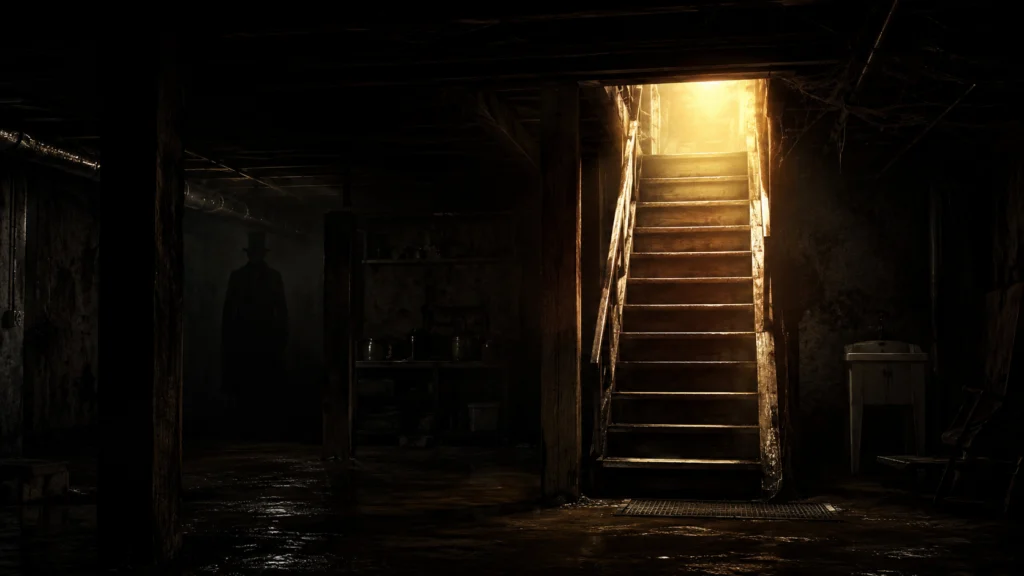
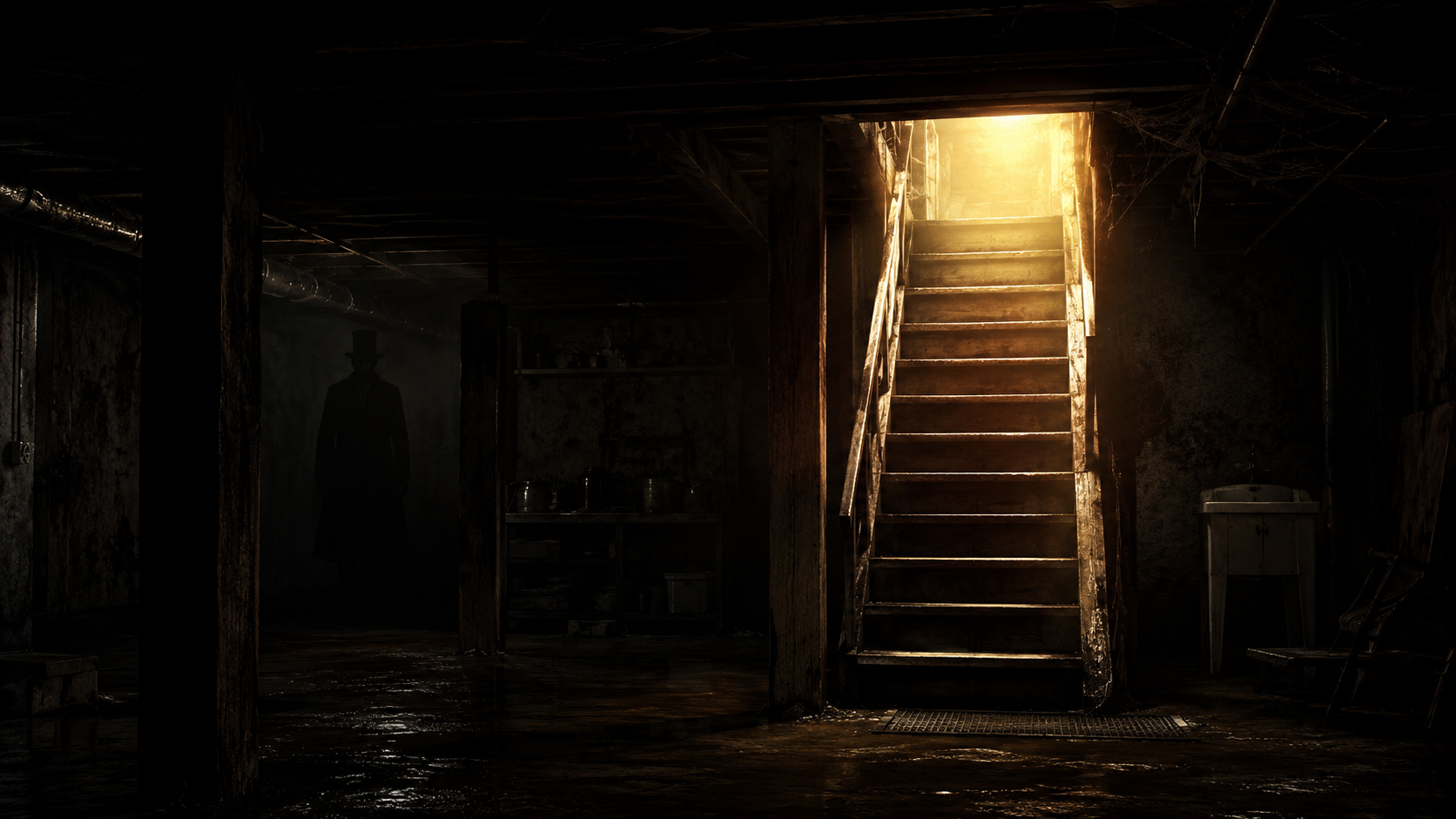
The basement represents the deep subconscious. It is the place where we store the things we aren’t actively thinking about but still carry with us. By locking the Babadook in the basement, Amelia is acknowledging that her grief over Oskar will always be part of her foundation. But it no longer has the run of the house. It no longer sits in the passenger seat of her car or hides under her son’s bed. It has its designated space.
Why Worms? The Significance of the Feeding Ritual
In the final moments, we see Amelia digging up earthworms from her sunny garden, putting them in a bowl, and bringing them down to the dark basement.
The act of feeding the Babadook is an act of maintenance. It represents the daily work required to maintain your mental health. Some days, the monster might be quiet. Other days, it might thrash and scream, trying to pull you back into the dark. By bringing it worms-things pulled from the earth, associated with death and decay, but also fertilization and new life-Amelia is giving her trauma the attention it needs to stay placated.
She tells Samuel, “He was quiet today.” This casual remark highlights her new reality. She checks in on her pain, processes it, and then goes back upstairs to enjoy her son’s birthday.
A Shift in Perspective: Why Samuel Changes by the End
If you found Samuel incredibly annoying during the first half of the movie, you are not alone. He screams, he breaks things, he brings homemade weapons to school, and he constantly demands his mother’s attention. Many viewers complain about his character, completely missing the cinematic trick being played on them.
We are seeing Samuel through Amelia’s exhausted, depressed eyes.
To a woman suffering from severe, unaddressed trauma, a high-energy six-year-old feels like an aggressive threat. Samuel’s erratic behavior is actually a direct response to his mother’s emotional absence. He acts out because he is terrified of the “monster” growing inside her. He builds weapons not to fight a ghost, but to protect himself from the woman his mother is becoming.
Notice how Samuel’s demeanor completely shifts at the end of the film. Once Amelia accepts her grief and shows him genuine affection, Samuel calms down. He is suddenly articulate, polite, and manageable. He performs his magic tricks with precision. The boy didn’t magically change; his environment changed. His mother finally sees him as her beloved son, rather than a painful reminder of her dead husband.
The Fan Theory: Did She Just Go Mad?
No great movie exists without a few wild fan theories, and The Babadook is no exception. A popular theory floating around the internet suggests that Amelia never actually conquered her demons. Instead, the theory argues that the overly sweet, saccharine ending-where Samuel is a perfect angel, the sun is shining, and Amelia casually feeds a shadow monster in her basement-is entirely a hallucination.
Proponents of this theory argue that Amelia suffered a complete psychotic break during the climax. They suggest she actually killed Samuel (just as the book prophesied) and the bright, happy ending is her shattered mind trying to protect her from the horrific reality of what she did.
While it is a chilling thought, director Jennifer Kent has largely debunked this purely cynical read. The intention behind the film was always rooted in the very real, very grounded struggle of navigating depression and coming out the other side. The ending is meant to be genuinely hopeful.
Why Jennifer Kent Chose This Ending
Jennifer Kent wrote The Babadook based on a short film she made years earlier called Monster. She has stated in interviews that she wanted to explore the taboo subject of motherhood-the idea that not every woman instantly loves the experience of raising a child, and that struggling to connect with your child doesn’t make you evil.
She didn’t want a standard Hollywood ending where the monster is blown up with a shotgun or banished by a priest. Those endings offer cheap, temporary thrills but severely lack emotional resonance. Kent wanted an ending that felt honest. For anyone who has ever battled severe anxiety, depression, or PTSD, the idea of finally wrangling your inner demons into a manageable space is the ultimate triumph.
Amelia’s smile is Kent’s message to the audience: It gets better. You cannot erase the past, but you can choose how much power it holds over your future.
Final Actionable Tip for First-Time Watchers
If you just watched The Babadook for the first time and felt overwhelmed by the bleak atmosphere, go back and re-watch the first 20 minutes right now. Pay close attention to the sound design, the color palette (almost entirely drained of warm colors), and Essie Davis’s body language. Watch how often she physically pulls away from her son. When you view the beginning of the movie knowing that the monster is already inside her, the entire narrative transforms from a standard haunted house movie into a brilliant psychological character study.
🍿 The Binge Score: 9.5 / 10
The Babadook isn’t just a scary movie; it is an essential piece of modern cinema. It trades cheap jump scares for deep, lingering psychological dread. Essie Davis delivers a powerhouse performance that should have won an Oscar. A near-perfect film that rewards multiple viewings.
Frequently Asked Questions (FAQ)
Does The Babadook represent depression?
Yes, the Babadook is widely recognized as a physical manifestation of Amelia’s severe depression, trauma, and unresolved grief over her husband’s sudden death. The monster’s behavior-thriving in isolation, draining her energy, and pushing her toward self-harm-directly mirrors the symptoms of clinical depression.
Why does Amelia feed the Babadook worms?
Feeding the creature earthworms is a metaphor for managing trauma. By actively going down to the basement to feed it, Amelia acknowledges her grief and gives it a designated space, ensuring the “monster” stays calm and doesn’t take over her daily life again.
Did Amelia write the Babadook book?
It is heavily implied that Amelia created the pop-up book herself. The film mentions early on that she used to be a writer of children’s articles, and her hands are shown covered in charcoal later in the movie, suggesting her subconscious mind crafted the cursed book as an outlet for her repressed rage.
Why is Samuel so annoying in the movie?
Samuel appears annoying because the film is framed heavily through Amelia’s exhausted, resentful perspective. Furthermore, his erratic, hyperactive behavior is a trauma response; he senses his mother’s emotional detachment and acts out desperately to get her attention and protect her.
Does the dog die in The Babadook?
Yes, sadly, the family dog Bugsy is killed. When Amelia becomes fully possessed by her grief and rage (the Babadook), she snaps the dog’s neck. It is a harsh, brutal scene that signifies she has completely lost control of her mind.