Sam Esmail’s apocalyptic thriller leaves audiences with plenty of terrifying questions, but nothing haunts viewers quite like the unnerving, multiplying herds of deer staring silently from the woods. By the time you finish reading this breakdown, you will know exactly why these traditionally peaceful animals turned into the film’s most disturbing omen and what their strange behavior actually means for the fate of the characters.
Table of Contents
At a Glance: Leave the World Behind
- Director / Writer: Sam Esmail (Based on the novel by Rumaan Alam)
- Lead Cast: Julia Roberts, Mahershala Ali, Ethan Hawke, Myha’la, Farrah Mackenzie
- Release Date: December 2023
- Where to Watch: Netflix
- Core Themes: Cyberwarfare, societal collapse, human isolation, environmental disruption
[SPOILER WARNING: This article contains massive, unfiltered plot spoilers for Leave the World Behind. If you haven’t seen the film, bookmark this page, go stream it, and come back.]
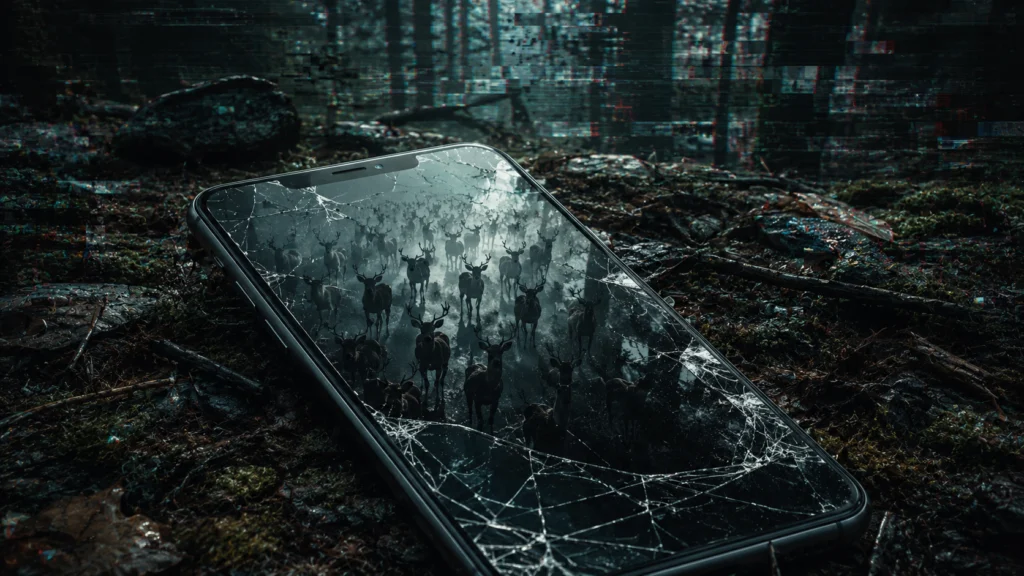
The Subversion of Innocence: Why Deer?
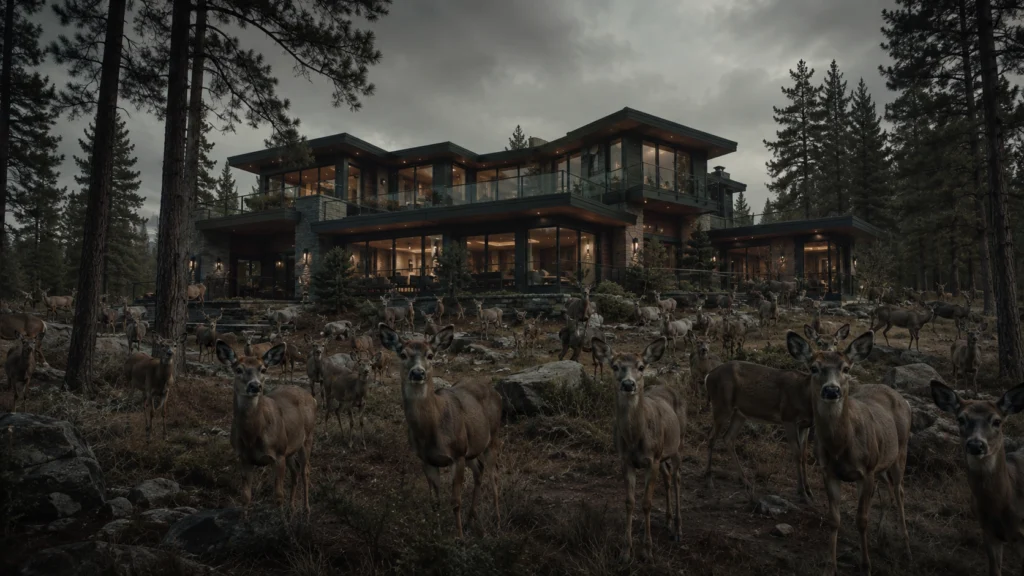
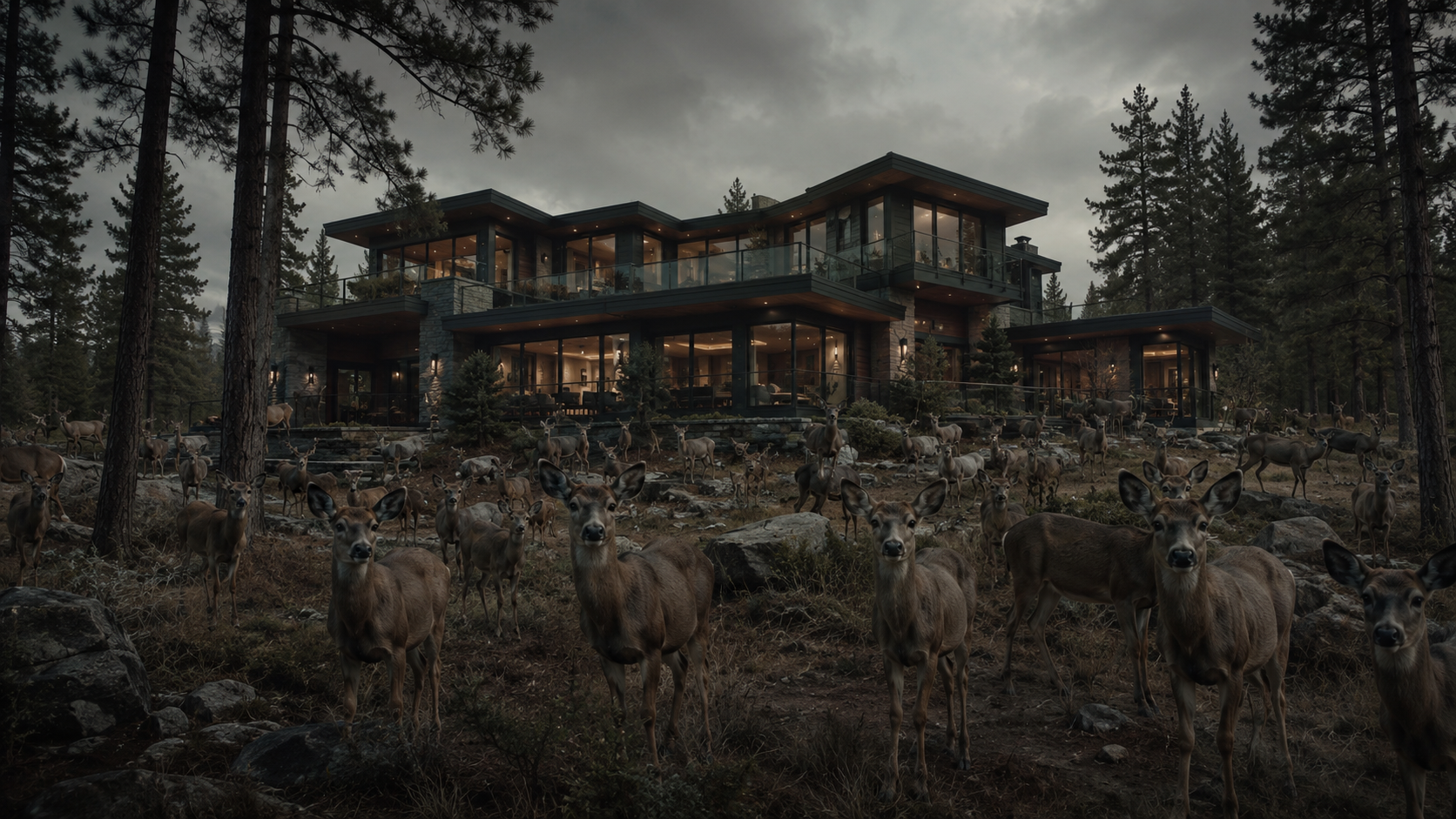
When society collapses, we expect explosions, riots, and panic. We do not expect a dozen deer to stand in a backyard, staring at us with dead-eyed intensity.
The primary significance of the deer in Leave the World Behind lies in their complete subversion of our expectations. In literature and film, deer traditionally represent innocence, peace, and natural harmony. They are prey animals-skittish, fragile, and eager to run at the snap of a twig.
By having these creatures stand their ground, multiply in numbers, and stare directly at the humans, the film creates a profound sense of psychological dread. It tells the viewer that the fundamental rules of nature have broken down. The event happening in the film isn’t just a glitch in the WiFi or a temporary power outage; it is an event so massive that it has disrupted the primal instincts of the animal kingdom.
The Disruption of the Natural Order
To understand the deer, we have to look at the cause of the apocalypse. The film heavily implies a coordinated, multi-pronged cyberattack designed to dismantle the United States from the inside out.
This attack involves messing with satellites, disabling GPS systems, and emitting high-frequency microwave sounds (the horrific screeching noise that shatters the glass). Animals rely heavily on the Earth’s magnetic fields and environmental cues for migration and survival. When human technology goes haywire on a global scale, it throws the local wildlife into absolute chaos.
The deer are not plotting against the Sandford or Scott families. They are confused, terrified, and displaced. Their migration patterns have been entirely scrambled by the technological collapse happening around them. They gather in massive numbers because their internal navigation systems are broken, trapping them in a bizarre holding pattern on the Long Island estate.
What Director Sam Esmail Said About the Deer
You don’t just have to take our word for it. Director Sam Esmail has spoken explicitly about the deer symbolism.
In interviews, Esmail noted that he wanted to take an image that is classically beautiful and twist it into something menacing. He pointed out that turning the deer into an ominous warning sign was a deliberate choice to showcase how deeply the human-made disaster was bleeding into the natural environment. The deer act as a visual barometer for the severity of the crisis. The worse the cyberattack gets, the larger and bolder the herds become.
Rose’s Unique Connection to the Animals
While the adults in the film are busy arguing over class divides, racial tensions, and who owns the house, the youngest character, Rose, is the only one actually paying attention to the world around her.
Rose notices the deer early on. She feels an odd, almost spiritual connection to them. She tells her family that the animals are trying to communicate something, but her concerns are dismissed as childish imagination.
This highlights a major theme of the movie: our obsession with screens and artificial problems blinds us to massive, existential threats staring us right in the face. Rose eventually realizes that the adults have no plan and no control. The deer serve as her wake-up call. They push her to stop waiting for her parents to save her and to take action for her own survival-which ultimately leads her to the underground bunker.
The Confrontation Scene: Humanity vs. Nature
The climax of the deer subplot happens when Amanda (Julia Roberts) and Ruth (Myha’la) venture into the woods to find the missing Rose. They are suddenly surrounded by a massive, intimidating herd of hundreds of deer blocking their path.
The animals don’t attack, but they posture aggressively. How do the women respond? They don’t try to understand the animals or retreat peacefully. Instead, they step forward, wave their arms, and scream at the top of their lungs until the herd scatters.
This scene is incredibly loaded with meaning:
- The Illusion of Dominance: Amanda and Ruth reassert their dominance over nature through sheer volume and aggression. It is a temporary, hollow victory. They might have scared the deer away, but they are still completely helpless against the broader apocalypse.
- Shared Humanity: Up until this point, Amanda and Ruth actively disliked each other. Confronting the deer forces them to unite against a common, primal threat. The terrifying presence of the animals bridges the gap between them, forcing them to realize they need each other to survive.
- Nature Always Wins: The scene serves as a stark reminder that humans are just visitors on this planet. Without our satellites, supply chains, and power grids, we are incredibly vulnerable. The deer outnumber them entirely, showing that when the human world ends, nature will reclaim the space.
The Flamingo Exception
It is worth noting that the deer aren’t the only animals acting strangely. Later in the film, a flock of flamingos lands in the swimming pool.
Flamingos are not native to New York. Their presence confirms the theory that global navigation systems for wildlife are completely destroyed. The world’s natural compass is broken. The flamingos and the deer are two sides of the same coin-one represents an invasion of the alien and exotic, while the other represents the familiar turning hostile.
The Difference Between the Book and the Movie
If you read Rumaan Alam’s 2020 novel of the same name, you might notice that the deer play a slightly different role.
In the book, the animals are present and act strangely, but the visual terror of the massive, unified herd staring down the characters is a specific cinematic invention by Sam Esmail. The book uses the animals more as atmospheric background noise to highlight the changing environment, whereas the film elevates them to active participants in the psychological horror. The movie uses the deer as a constant, ticking clock-a visual reminder that things are escalating rapidly outside the walls of the luxury Airbnb.
Final Actionable Tip for First-Time Watchers
If you just finished the movie and feel frustrated by the ambiguous ending, go back and re-watch the scene where the oil tanker crashes onto the beach. Pay close attention to the spatial awareness of the characters. You will notice that the humans are entirely focused on their phones and their immediate squabbles, ignoring the massive warning signs around them until it is too late. The deer operate on the exact same principle. The next time you watch it, track how often the animals show up before a major technological failure happens on screen. They are the ultimate warning system that humanity forgot how to read.
🍿 The Binge Score: 8.5 / 10
Leave the World Behind is a masterclass in slow-burn tension. It trades zombies and nuclear explosions for the quiet, creeping dread of losing our modern conveniences. The performances are stellar, and the cinematography-especially those sweeping, unsettling shots of the deer-will stick with you long after the credits roll.
Frequently Asked Questions (FAQ)
Why did the deer gather in Leave the World Behind?
The deer gathered because the massive cyberattack disrupted the Earth’s natural magnetic fields and navigation systems. Unable to migrate or follow their normal instincts, the confused animals gathered in large numbers in the local woods.
Were the deer trying to hurt the family?
No, the deer were not intentionally trying to attack the characters. Their menacing behavior was a byproduct of extreme confusion, fear, and displacement caused by the collapse of the surrounding environment.
What is the deeper meaning of the deer in the movie?
The deer symbolize the breakdown of the natural order and act as a visual omen. They represent the idea that human reliance on technology has blinded us to nature, and when that technology fails, we are left completely vulnerable to the elements.
Do the deer bite in Leave the World Behind?
The deer never physically attack or bite anyone in the film. They rely on intimidation, staring, and sheer numbers to create an atmosphere of intense psychological dread rather than physical violence.
Why did the flamingos show up?
Similar to the deer, the flamingos appeared because their internal migratory compasses were destroyed by the cyberattack. Their arrival in a New York swimming pool proves that the environmental disruption is happening on a massive, global scale.